Showing posts with label week 3. Show all posts

An example of an e-commerce failure and its causes

>> Wednesday, June 17, 2009

The internet has lead lots of e-commerce success like Amozon, ebay ,Dell. But there are also some failed e-commerce.

Pets.com is an example of the e-commerce failure. Pets.com founded in 1998, an online retailer of pet products, information and resources direct to consumers over the world wide web. It gained high national attention by advertising at the variety of media such as megazine, TV, radio and etc. The famous featured sock-dog "spokespuppet" which was voted the fifth most popular spot in USA and the slogan "because pets can't drive" made the Pets.com became the well known company in USA.
Although the sales rose dramatically due to the high attention from the consumer, it still went from Initial Publishing Offering to liquidation in a mere nine months because of the dot-com bust just like others dot-com.
There were some reasons that cause the Pets.com failed and defunct in 2000. First, the Pets.com was lacked of workable business plan because they spent more than their earned revenue. Overestimated the potential market was also one of the failure reason. Pets.com spent million on the warehouse space and tried to obtain the online pet market. however, there wasn't large enough market and the growth wasn't rapid as their estimated. The other main reason was they had poor customer position.They offered discount and shipment to attract customers, but never think why should a customer purchase online rather than just buy at the nearer pet accessories store.Thus, these are the reasons how the well known online business can shut down in the short time.

Read more...

Indentify and compare the revenue model for Google,Amazon.com & Ebay

Google Revenue Model


As a business, Google generates revenue by providing advertisers with the opportunity to deliver measurable, cost-effective online advertising that is relevant to the information displayed on any given page. Today, the majority of Google revenue comes from advertising. Its products and services include:


1)Google AdWords : It enables advertisers to deliver relevant ads targeted to search queries or web content to potential customers across Google sites and through the Google Network, which consists of content owners and websites. Their proprietary technology automatically matches ads to the content of the page on which they appear, and advertisers pay them either when a user clicks on one of its ads or based on the number of times their ads appear on the Google Network.


2)Google Adsense :Google distribute their advertisers' AdWords ads for display on the Google Network through their AdSense program. They share most of the revenue generated from ads shown on a site of a Google Network member with that member.



3)Froogle :Keeping in touch with other sites like Amazon.com, Buy.com and Yahoo.com, Google created a new shopping search tool called “Froogle". It has been called one of the most innovative price conscious tools on the Internet. Using the same technologies of Google.com, Froogle employs direct data received from merchants and through web crawls alone. Depending on the successes of the beta testing phase will provide adequate information as to whether Google continues with Froogle


eBay Revenue Model


Launched in 1995, eBay started as a place to trade collectables and hard-to-find items. Today eBay is a global marketplace where businesses and individuals can buy and sell practically anything.


ebay revenue model is very similar to Amazon.com. Both of their majority revenue are from sales and transaction revenue model. eBay generates revenue from a number of fees. There are fees to list a product (Insertion Fee) and fees when the product sells (Final Value Fee), plus several optional adornment fees, all based on various factors and scales.


Furthermore, affiliate fees also one of the ebay’s revenue models. eBay runs an affiliate program under the name eBay Partner Network. eBay affiliate marketers fees are paid a percentage of the eBay seller's transaction fees. The payout is 50% to 75% of the fees paid for an item purchased.


Amazon.com Revenue Model

Amazon.com started as an on-line bookstore but soon diversified to product lines of VHS, DVD, music CDs and MP3s, computer software, video games, electronics, apparel, furniture, food, toys, etc.

There is a significant difference of revenue model between Google and Amazon.com. Amazon.com generates its majority revenue by sales and transaction revenue model. Amazon Marketplace allows sellers to offer their goods alongside Amazon's offerings. Buyers can buy new and used items sold directly by a third party through Amazon.com using Amazon Marketplace. This sales strategy and program has been very profitable for Amazon.com. Amazon charges a commission rate based on the sale price, a transaction fee, and a variable closing fee.

Besides that, Amazon.com also generates revenue by affiliate revenue model. Amazon derives about 40 percent of its sales from affiliates whom they call Associates, and third party sellers who list and sell products on the Amazon websites. Associates receive a commission for referring customers to Amazon by placing links on their websites to the Amazon homepage or to specific products. If a referral results in a sale, the Associate receives a commission from Amazon. Worldwide, Amazon has "over 900,000 members" in its affiliate programs.

Read more...

History & evolution of e-commerce

What does e-commerce mean anyway? E-commerce is the pre-eminent buzzword of the online business revolution. It captures the excitement and focus of this fast emerging market. Moreover, electronic commerce (e-commerce) is the paperless exchange of business information using electronic data interchange (EDI), e-mail, electronic bulletin boards, fax transmissions, and electronic funds transfer. It refers to Internet shopping, online stock and bond transactions, the downloading and selling of “soft merchandise” (software, documents, graphics, music, etc.), and business-to-business transactions.

E-commerce was firstly started to develop in the early 1970s with electronic funds transfer (EFT), electronic data interchange (EDI) and interorganizational system (IOS). EFT is the funds that can be routed electronically from one organization to another. Furthermore, the use of this application was limited to financial institutes, large corporations, and some daring businesses. Then, EDI was evolved to improve the limitation of EPT. EDI is used to electronically transfer routine documents that expanded electronic transfers from financial transactions to other types of transaction processing. While IOS is a system which allows the flow of information to be automated between organizations in order to reach a desired supply-chain management system, which enables the development of competitive organizations.

However, in 1984 EDI was standardized through ASC X12. This guaranteed that companies would be able to complete large amounts of transactions with one another reliably and stable. The next major step occurred in 1992 when the Mosaic web-browser was made available, it was the first ‘point and click’ browser. The Mosaic browser was quickly adapted into a downloadable browser, Netscape. It was providing users a simple browser to surf the Internet and a safe online transaction technology called Secure Sockets Layer. So, Amazon and eBay were popular e-commerce sites in the year 1995. Besides, in July 1995, Jeff Bezos boxed up the first book ever sold on Amazon.com from his Seattle garage. Within its first 30 days of business, the self-proclaimed "Earth's largest bookstore" sold books to online shoppers in all 50 U.S. states and 45 countries. He was the first person to sell his books by using e-commerce. In addition, the digital subscriber line (DSL) was another key moment in the development to of e-commerce in the year 1998. It allowed quicker access and a persistent connection to the Internet.

In the same year, AOL was another emergence in the development of e-commerce. AOL had sales of 1.2 billion over the 10 week Christmas season from online sales. With the development of Red Hat Linux, those who used computers had a choice. Linux gave users another choice in a platform other then Windows that was reliable and open-source. Therefore, Microsoft faced with this competition needed to invest more in many things including electronic commerce. Napster founded in 1999, gained a vital stage even though in the beginning it was only a source through which users shared free music files. Many consumers used the site and were ordering what they wanted from the industry. In the year 2000 Time Warner and AOL merged and which combined a new online company with the well set traditional company. In February 2000 hackers attacked some major players of e-commerce, including Yahoo, eBay and Amazon. These attacks resulted that the need for improved security came to the forefront in the development of electronic commerce.

There was a prediction that the revenues, up until 2006, will grow 40% to 50% annually. Expectations of higher prices as well as larger profits for e-commerce business are also presented. As a result, e-commerce was adapted by almost every major retail company such as Wal-Mart, Borders bookstores, Sears because it was simple and convenient to sell electronically. It can be seen that there will be a large growth in Business-to-Consumer (B2C) e-commerce, Business-to-Business (B2B) and Consumer-to-Consumer (C2C).

Read more...

An example of E-Commerce success and its causes-Dell

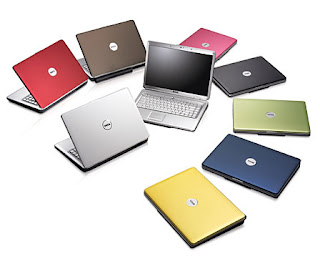
E-shopping brings a lot of convenience to the consumers. In Malaysia, more and more people start to purchase something online such as clothes, bags or even electronic products.Thus, you should not be strange about Dell.com-one of the most successful e-commerce company. It was founded in 1984 by Michael Dell on a simple concept: selling computer systems directly to customers.

Dell used the networking show as a platform to boast of his company's success in moving products online via its Web site, which claims $100 million in revenue and 2.5 million unique visitors per week. It also become one of the top five computers makers in the world, behind Hewlett-Packard in 2008. Dell using direct online trading as its major e-commerce activity,their strategy is to sell products with no retail outlets and no middleman. Therefore, there is more cheaper for us to buy online.

What makes Dell to be successful?

1. Culture.
Dell's winning ways begin and end with its culture. Dell has created a disciplined culture that focuses on optimizing its operational model, responding to its customers' needs and sustaining a self-motivated workforce.
2.Being a low cost provider creates flexibility and market advantage.
Their products are inexpensive and in good quality. The low costs attract customers and the quality of their products is maintained from time to time.
3.Technical supports such as business-hours telephone support and next business-day on-site support increase customer's confidence towards Dell. Customers can fix their problem by phone call to customer service centre or visiting by technician.
4.Focus on customer-oriented and allow customers to customize their products.
Buyers can customize their own computers during the ordering process by choosing what components that they prefer based on their budget and needs.
5.Effective and efficient delivery services.
Products will be delivered to customers in 5-8 working days.

In conclusion, Dell will become stronger in the future with its successful online marketing strategy due to the online shopping has become relatively popular.

Referred links:

1.http://www.dell.com/

2.http://en.wikipedia.org/wiki/Dell


Read more...

  © Free Blogger Templates Skyblue by Ourblogtemplates.com 2008

Back to TOP